
Step away from the glowing screen. Ignore the siren call of another rushed espresso. There is a gentler rhythm waiting to be reclaimed in the middle hours of the day—a ritual steeped in warmth, intention, and quiet elegance. Afternoon tea is not simply about eating and drinking; it is about remembering how to pause. It is a small, deliberate act of care in a world that rarely slows down.
At its heart, afternoon tea begins with intention. The kettle is filled. The water heats. Time stretches just enough to allow anticipation to bloom. Choosing a tea becomes an act of self-awareness: perhaps a floral jasmine to calm the mind, a brisk English Breakfast to steady the senses, or a soothing chamomile to soften the edges of a long day. As the tea steeps, color deepens, aromas rise, and the day’s urgency gently loosens its grip.
The table, however simple, transforms into a place of quiet pleasure. A plate of savoury bites sets the tone—neat sandwiches layered with cucumber, soft cheese, or roasted vegetables, trimmed of excess and rich only in balance. These small portions encourage mindfulness, reminding us that satisfaction does not require excess, only attention.
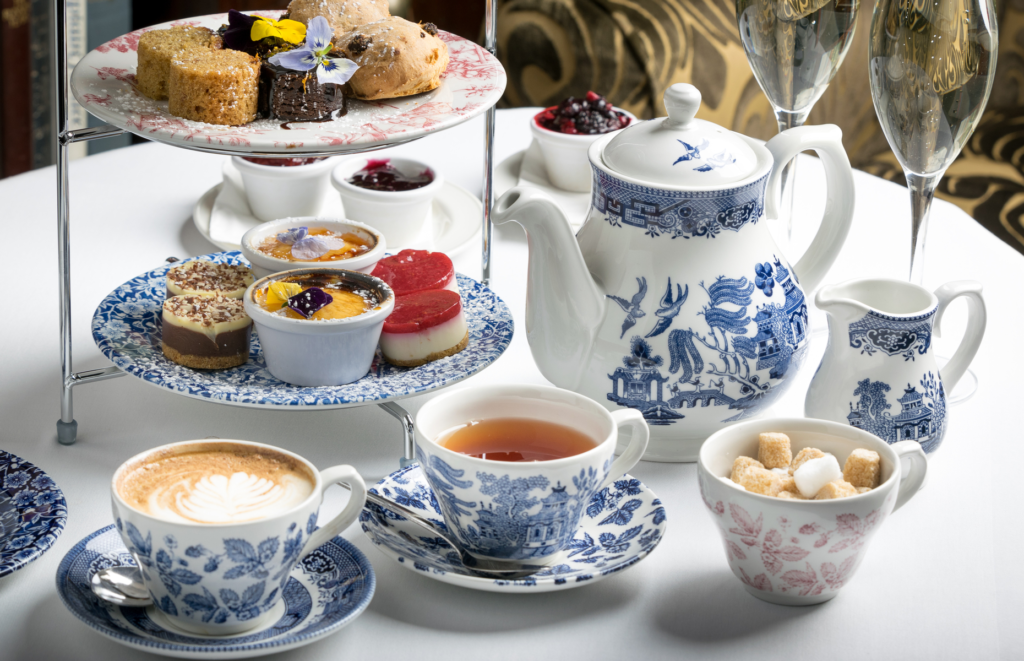
Then come the scones, the undeniable heart of the experience. Lightly golden, tender at the center, they invite a pause all their own. Breaking one open releases warmth and comfort in equal measure. Whether crowned with silky cream, bright fruit jam, or both, this moment feels timeless—unchanged by trends, untouched by haste.
The final flourish belongs to the sweets. Petite cakes, fruit tarts, or delicate pastries offer color and joy, each one a celebration in miniature. They are meant to be savored slowly, not devoured, their beauty lingering just long enough to be appreciated before the final bite.
Yet afternoon tea is not defined by what is served, but by how it makes us feel. It is a space for conversation that wanders freely, for silence that feels full rather than empty. It can be shared with friends, marked by laughter and soft clinks of teacups, or enjoyed alone as a rare moment of uninterrupted calm. In either form, it is an act of presence.
In choosing afternoon tea, we choose to honor the in-between moments—the hours that are neither beginning nor end, but something quietly meaningful in their own right. It reminds us that rest does not need to be earned through exhaustion, and pleasure does not require a special occasion.
So when the day begins to blur and the afternoon feels heavy, let the kettle boil. Set out a cup, even an ordinary one. In that simple gesture lies a powerful truth: peace is often found not by escaping life, but by pausing within it. Afternoon tea is that pause—a gentle, gracious reset, waiting patiently to be rediscovered.

